Author: Zack Sapinsley PT, DPT, EMT, MSc, AIB-VRC
This Sunday, October 4, 2026, hundreds of people will gather at Denver’s Great Lawn Park for The Michael J. Fox Foundation’s Denver Run/Walk. Some will be living with Parkinson’s disease. Others will be family members, friends, caregivers, clinicians, and supporters. They’ll arrive for different reasons, but they’ll share something important: they’ll be moving together.
That sense of community matters.
Exercise is one of the most powerful tools available to people living with Parkinson’s disease. Regular physical activity can help maintain strength, mobility, balance, and function. But anyone who has tried to maintain an exercise routine knows that knowing exercise is good for you and actually doing it consistently are two different things.
Community can help bridge that gap.
Why Exercise Together?
There are plenty of ways to exercise independently. Walking, cycling, strength training, and home exercise programs can all play important roles in managing Parkinson’s. Group exercise adds something different: other people.
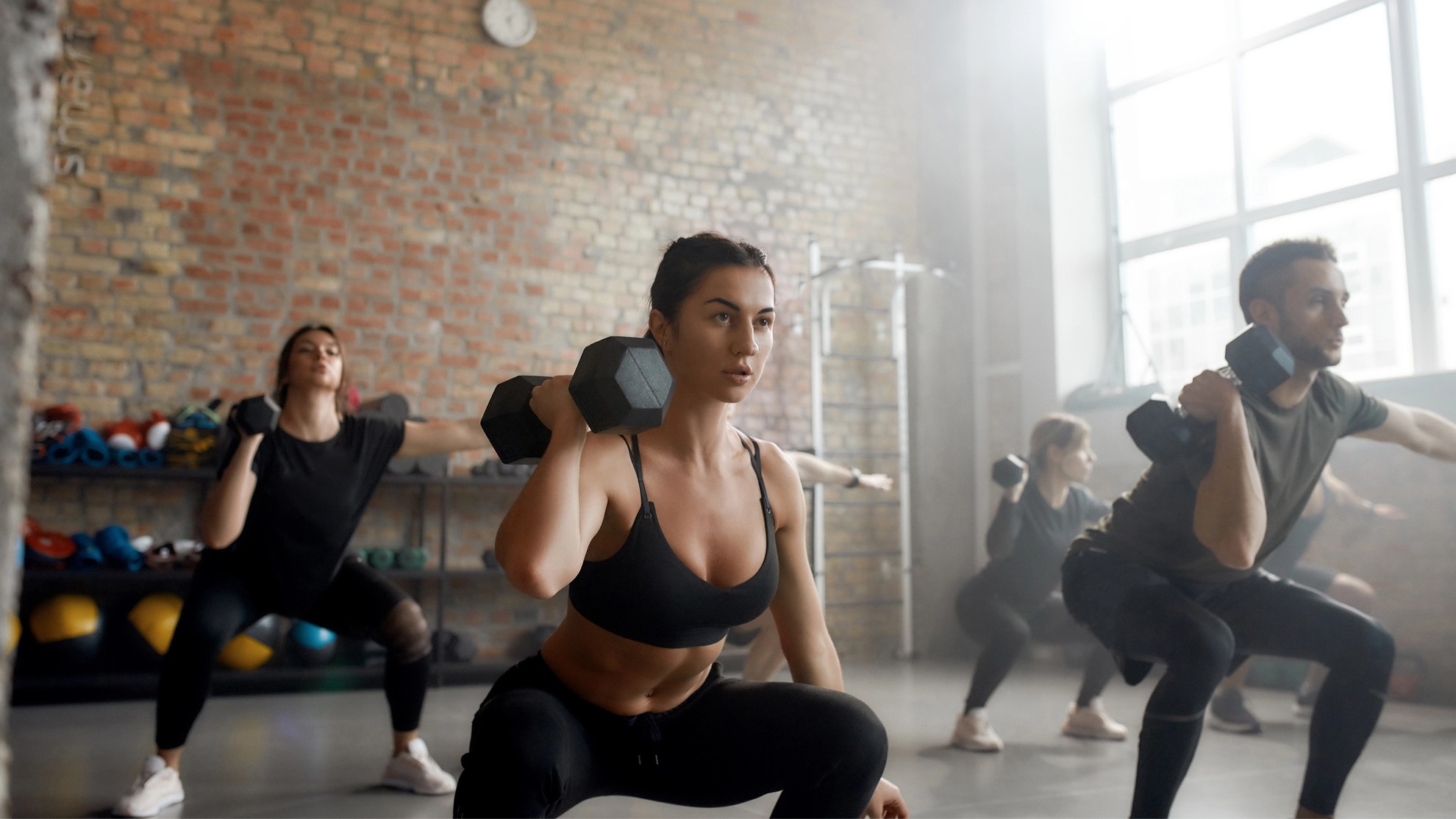
Research increasingly supports the value of that environment. A recent systematic review and meta-analysis found that group exercise can improve quality of life for people with Parkinson’s compared with usual care, while producing similar quality-of-life benefits to individual exercise. Researchers have suggested that socialization, engagement, and a sense of community may be among the reasons group programs are valuable.
Other research examining long-running Parkinson’s exercise programs has identified social cohesion, a supportive environment, and individualized exercise as important ingredients in keeping people engaged over time.
That last piece is particularly important. The benefits of exercise depend heavily on consistency. The perfect exercise program does little good if it sits unused on a piece of paper.
Sometimes knowing that a group of people is expecting to see you on Wednesday afternoon is a powerful reason to show up.
More Than Physical Exercise
Parkinson’s disease affects much more than movement. Changes in mobility, communication, independence, and confidence can make it harder to participate in activities and social environments that were once routine. Social isolation and loneliness can become meaningful concerns alongside the physical symptoms of the disease.
In a 2026 study of 231 people with Parkinson’s already participating in community- based exercise programs, nearly one-third screened positive for loneliness. Greater loneliness was also associated with differences in functional independence, mobility, and quality of life.
That finding is an important reminder. Simply putting people in the same room does not automatically create connection. But it does create an opportunity for it.
A good group exercise environment provides space to work hard, laugh, struggle, improve, and encourage one another. Over time, the people standing next to you can become part of the reason you keep coming back.
What I See in Punching for Parkinson’s
That idea has been one of my favorite parts of leading Punching for Parkinson’s at Evolution Physical Therapy in Park Hill.
We certainly exercise. We box. We work on strength, balance, coordination, reaction time, cardiovascular fitness, and the big, powerful movements that can be particularly valuable for people with Parkinson’s.
But the hour is also about being around other people who understand some of what you are experiencing.
There is something powerful about watching someone accomplish a movement that was difficult a few weeks earlier, hearing encouragement from across the room, or laughing together when an exercise does not go exactly according to plan.
As a physical therapist, I can design exercises and help people progress them safely. The participants create something I cannot prescribe on a home exercise sheet: community.
Denver Is Moving Together
That same idea will be visible on a much larger scale this weekend.
The Michael J. Fox Foundation’s Run/Walk Series brings together people with Parkinson’s, families, friends, clinicians, researchers, and supporters while raising money for Parkinson’s research. Denver’s event takes place Sunday, October 4 at 8:30 AM at Great Lawn Park.
You do not need to be a runner. You do not need to have Parkinson’s. You simply need a reason to show up. Events like this are a reminder that living with Parkinson’s does not have to be an individual pursuit. There is an enormous community of people moving, learning, researching, fundraising, exercising, and supporting one another. And community does not have to exist only at large events. It can happen every week.
Find Your People
If you are living with Parkinson’s, finding movement that you enjoy and can sustain is important. Finding people you enjoy doing it with may make that movement easier to sustain. Maybe that means walking with friends. Maybe it means joining a cycling or dance program. Maybe it means showing up to a Parkinson’s community event this weekend.
And maybe it means putting on a pair of boxing gloves.
Punching for Parkinson’s meets Wednesdays from 1–2 PM at Evolution Physical Therapy & Fitness in Park Hill. The class is designed specifically for people with Parkinson’s and combines boxing with strength, balance, coordination, cardiovascular exercise, and Parkinson’s-specific movement strategies in a supportive group environment.
Whether you join us in the gym or join hundreds of others at Great Lawn Park this weekend, the message is the same:
Keep moving. Keep showing up. And find people to move with.
References
Palm D, Swarowsky A, Kelly M, et al. Effect of group exercise on quality of life for Parkinson disease: systematic review and meta-analysis. Disability and Rehabilitation. 2025;47(17):4366-4378.
Swink LA, Diprinzio D, Novak D, et al. Examining Loneliness in People With Parkinson Disease Participating in Community-based Exercise. Journal of Neurologic Physical Therapy. 2026;50(2):88-95.
The Michael J. Fox Foundation for Parkinson’s Research. Run/Walk Series. 2026.